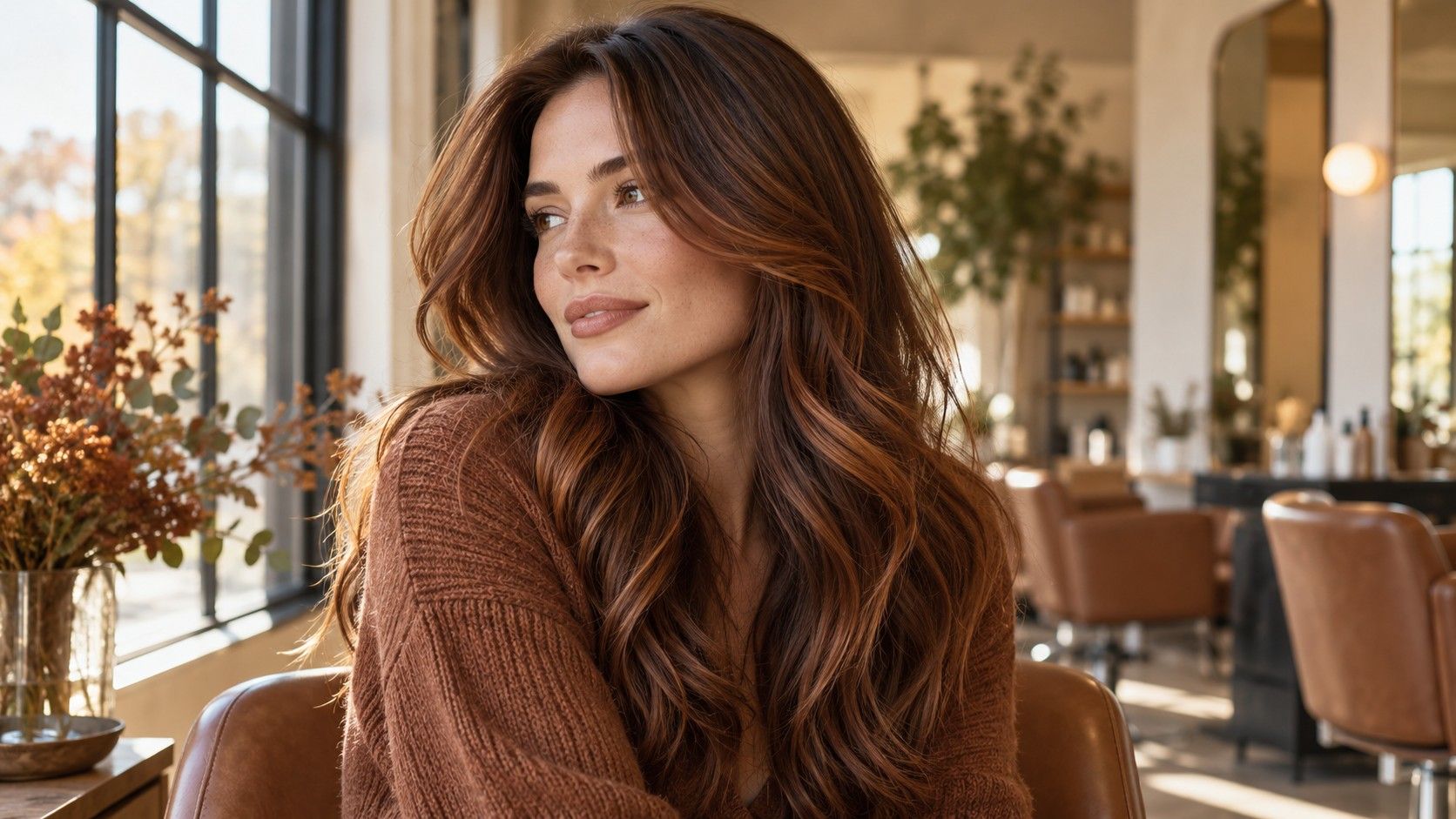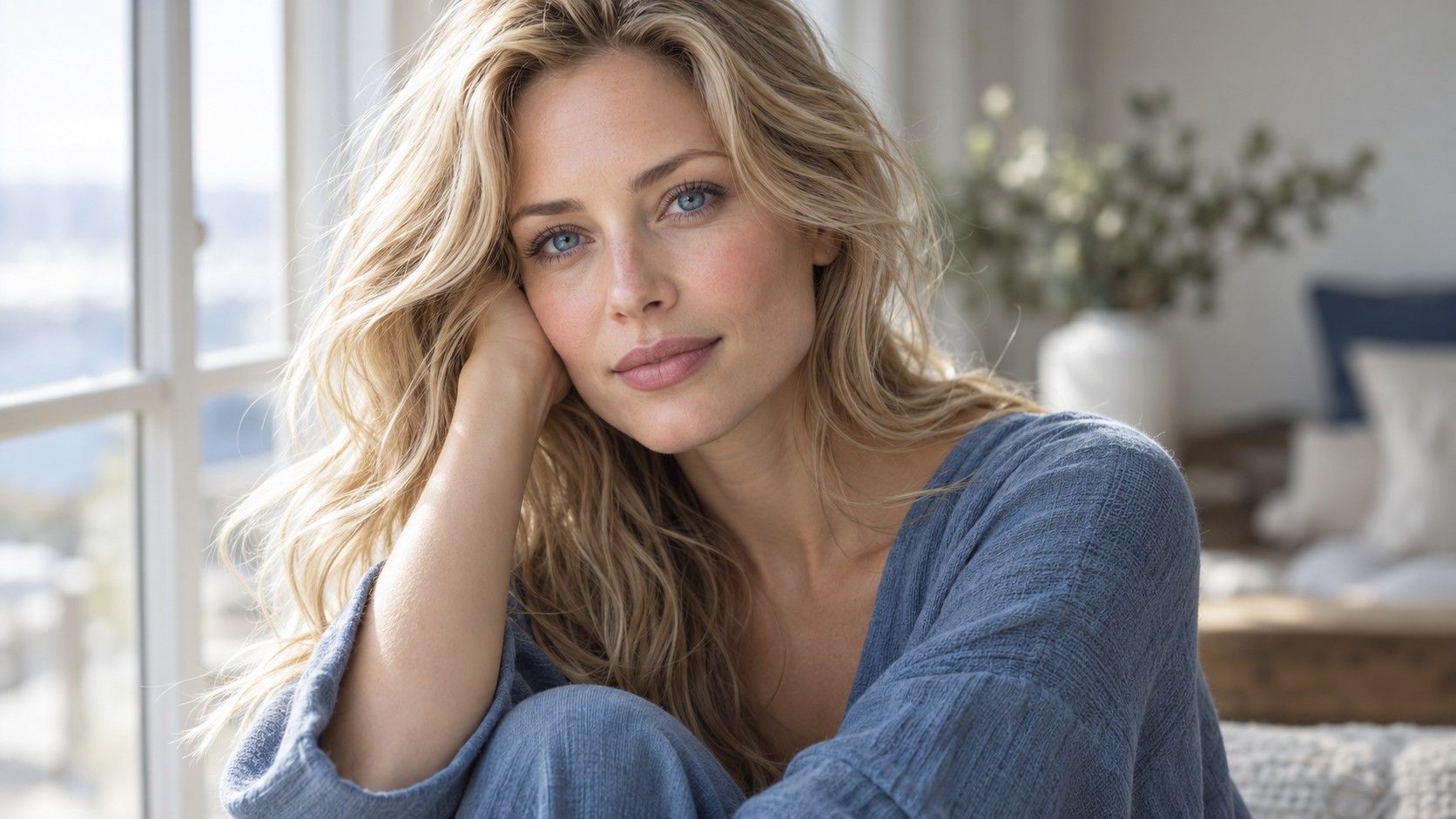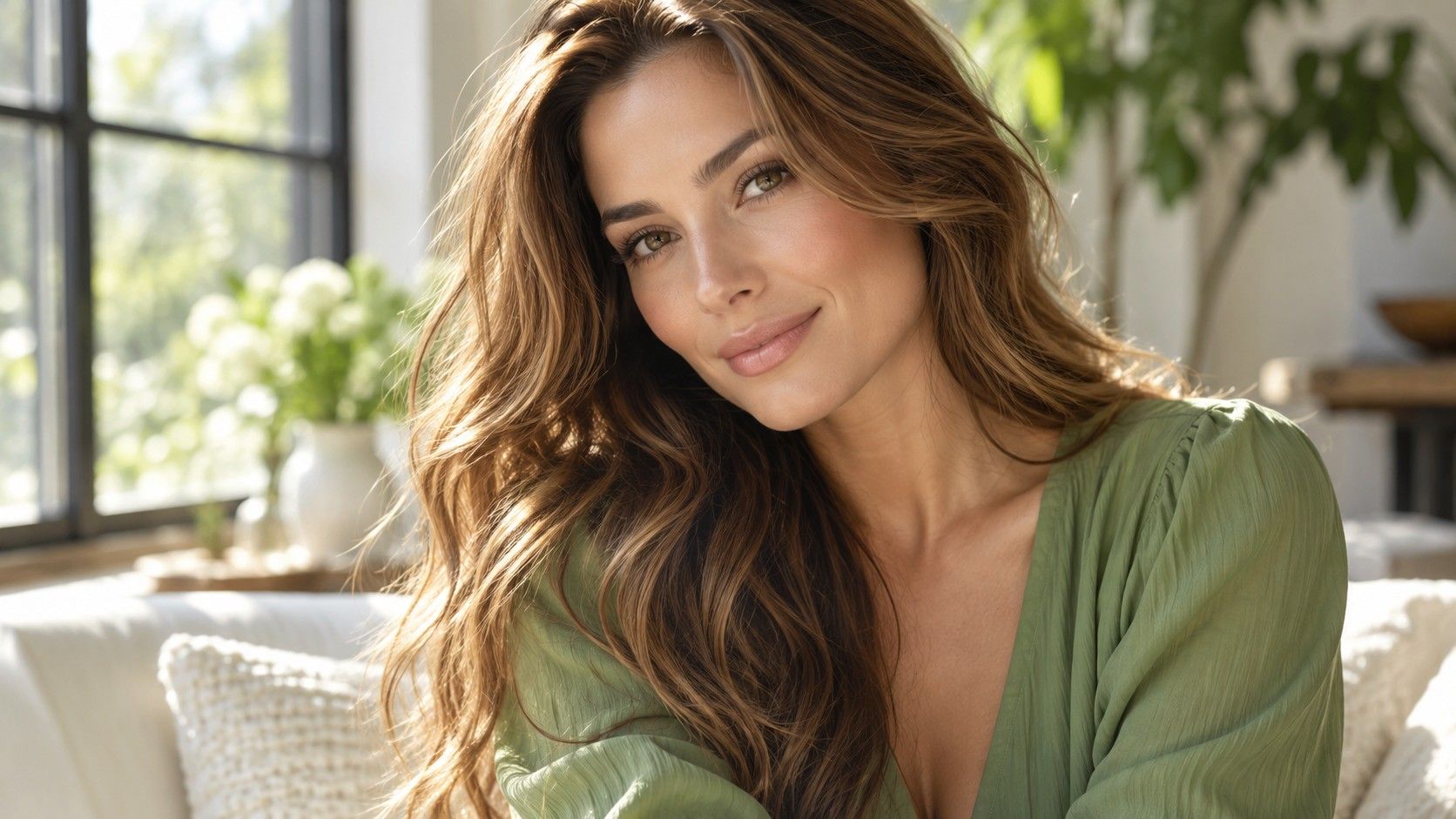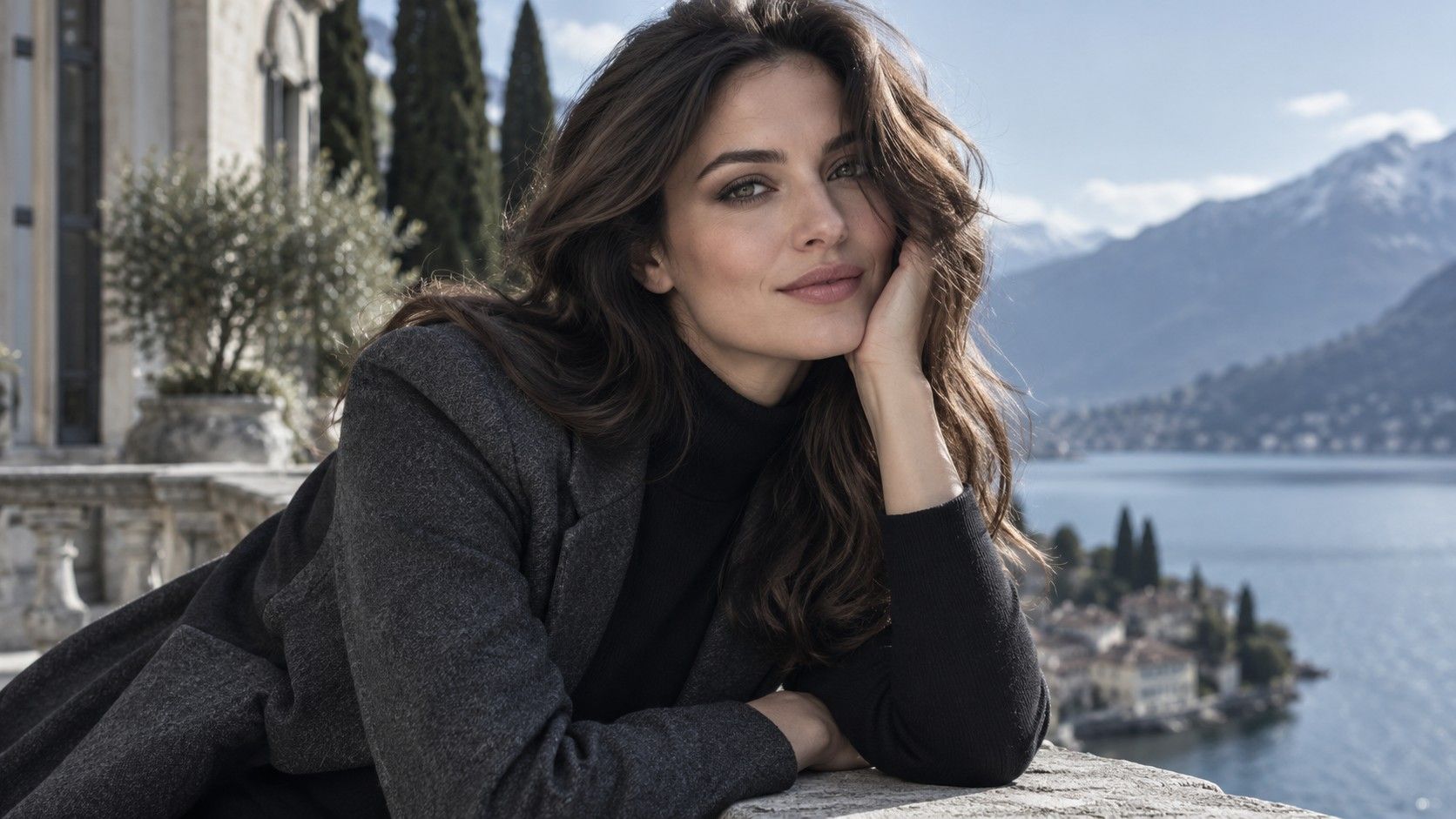
The winter label often leads to dramatic black and icy blonde pictures. There is room for cooler browns and measured contrast too. Compare the effect around your face and at the roots before picking a target.
Cool brown, near-black or icy lightness?
Winter palette hair colors often appear as extremes in image searches: glossy black beside icy blonde. Those images hide a useful middle option, a cool medium or deep brown with visible shine and movement. Put three references side by side at similar lighting and ask which change you actually want to see in the mirror.
Near-black hair can create a firm outline around the face. That may be the point, but it is a larger visual shift for someone whose natural hair is medium brown or blonde. Icy light hair also creates contrast when brows and roots are dark, yet it asks for a very different maintenance commitment.
The seasonal name does not prescribe a single depth. Before discussing tone, compare the root depth in the picture with your own. A reference that depends on a dark root and pale lengths is a two-tone design, not simply an icy color.
Choose references where the face is visible, because a cropped swatch of near-black hair tells you little about its overall impact. The outline against the forehead and cheeks is where depth becomes most apparent. A cool dark brown may deliver the same definition you like without looking pitch black indoors.
How much contrast should sit by the face?
The front pieces decide much of the first impression. A pale streak next to a dark base reads louder than small cool highlights placed through the interior. Save one face-level photograph for each arrangement and compare them with your usual hairstyle, including a tied-back view if that is how you wear it most days.
If you want a crisp outline, a dark single-color front can make the cut look strong. If you want some lightness, ask whether narrow pieces or a more obvious panel suit the effect you have in mind. A stylist can discuss placement in relation to your cut and existing color.
Contrast is a choice, not a diagnosis from hair or eye color. Some people prefer a softer result for work or simply because it feels familiar. Explain that preference directly rather than trying to meet an abstract winter rule.
Contrast also changes with the cut. A blunt dark bob can look sharper than long dark layers, and a fringe places more color directly above the eyes. Bring a photograph of your usual styling to the consultation so the proposed front pieces can be evaluated in a familiar shape.
Checking artificial color against natural roots
A deep dyed shade may look seamless in a freshly styled picture, then show a clear line as lighter natural hair grows. Conversely, a pale result on dark roots can be intentionally graphic or unexpectedly demanding. Look at photographs that show the part line after several weeks, not only the appointment-day finish.
Previous color on the lengths changes the planning conversation. A dark brown over lightened hair or an attempt to go pale through old dark color should be assessed by a professional who can see the hair in person. A reference image cannot show what work lies underneath.
Ask how the target will look at the roots in ordinary daylight and how often you would want it adjusted. The answer may move you toward a shadowed root, a less extreme depth, or a different placement without abandoning the cool direction.
If the goal is a dark result, ask whether old highlights will remain visible and how they may affect evenness. If the goal is pale, mention any old dark color on the lengths. The conversation is about realistic sequencing and appearance; it should happen before a target image becomes an expectation for one visit.
When highlights interrupt the clean outline
Highlights are often added by habit, but a dense scattering of warm pieces can blur the cool, high-contrast result you wanted. Compare a deep brown image with no visible highlights, one with a few narrow cool pieces, and one with broad ribbons. The differences are easier to see when the hairstyle and lighting are similar.
Cool light pieces can still become prominent as the overall color changes between visits. If your aim is a dark, continuous frame around the face, keep the front section in mind when deciding placement. Brightness through the ends may be enough.
Do not assume flat black is the only route to definition. A dark brown base with subtle variation can retain a clear silhouette while showing texture. Mention whether your priority is depth, coolness, or obvious contrast; those are related but separate decisions.
A few narrow cool pieces can give dark hair movement without turning the look into a striped highlight design. Compare the hair at the temples and at the ends in your saved photos. Where the light is placed will decide whether the result feels crisp at face level or lighter overall.
Planning a change you can keep
Estimate the time you are willing to spend on appointments before choosing the most dramatic reference. Darkening light hair, maintaining an icy blonde on dark hair, and blending cool brown near a similar natural base have different grow-out patterns. Ask for a practical account of each option for your starting color.
Use unfiltered daylight photos for the consultation and keep an image of what would be too dark or too pale for you. A useful boundary prevents a vague request for winter hair from turning into someone else’s idea of a bold transformation.
Check the proposed result in the context of your haircut and daily styling. The sharp contrast of a studio photograph may be softened by waves or amplified by a blunt fringe. Choose the version you want to live with on an ordinary weekday, not only in a finished portrait.
Finally, separate a temporary wish for novelty from a shade you want to repeat. If the high contrast picture feels exciting but the upkeep sounds tiring, take the cool brown image seriously. It can be a deliberate winter-inspired choice with a simpler growth pattern.