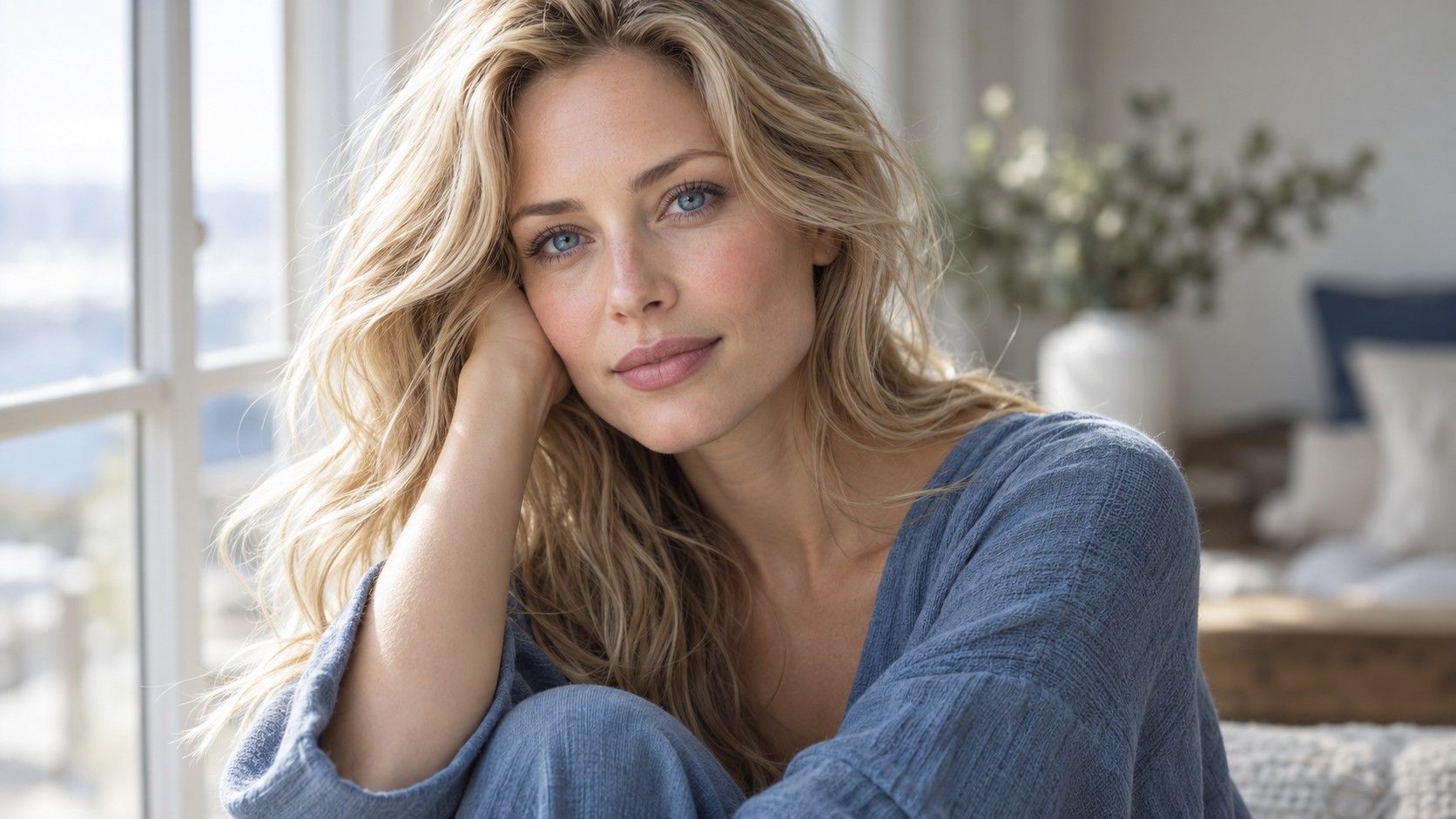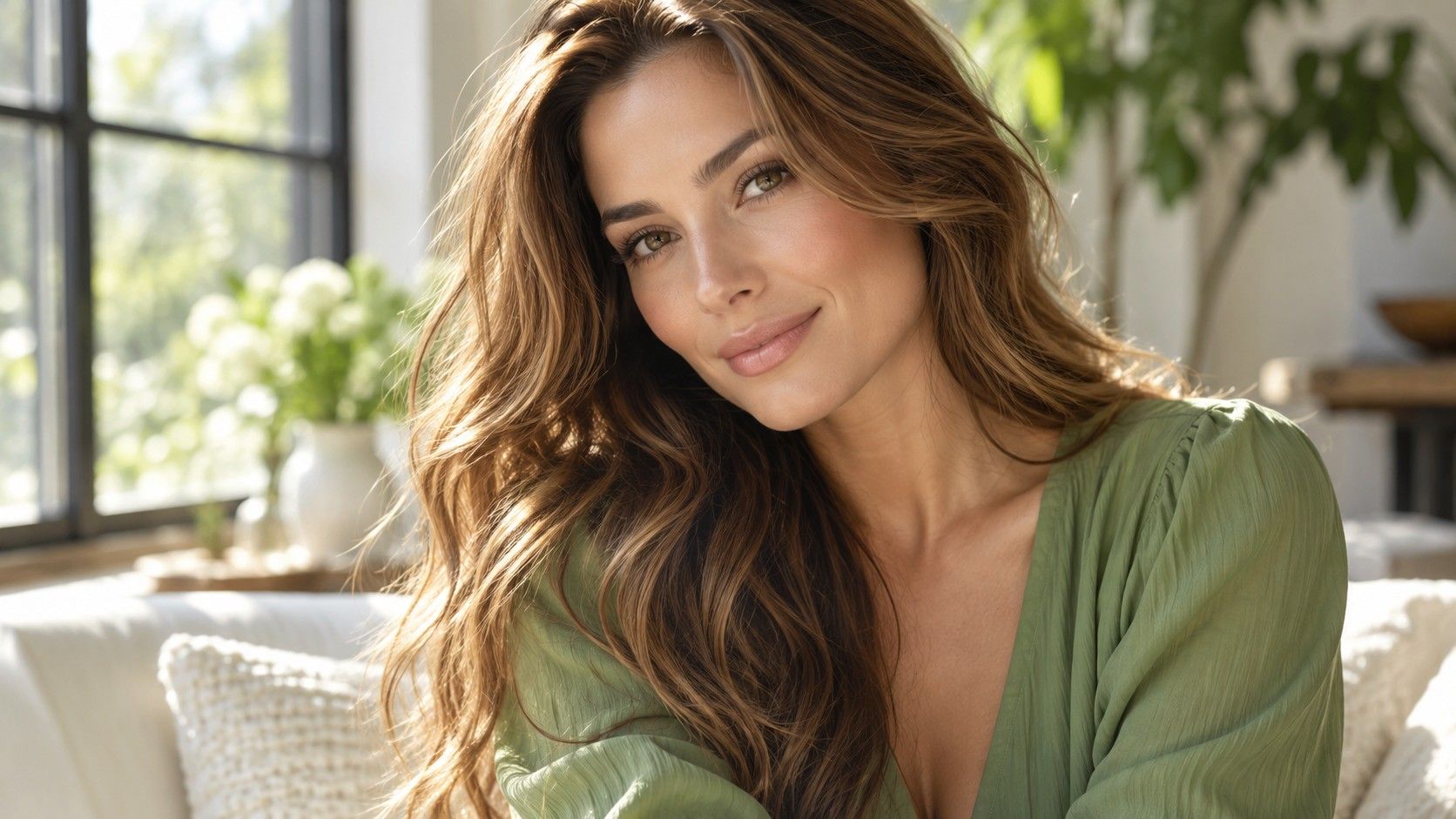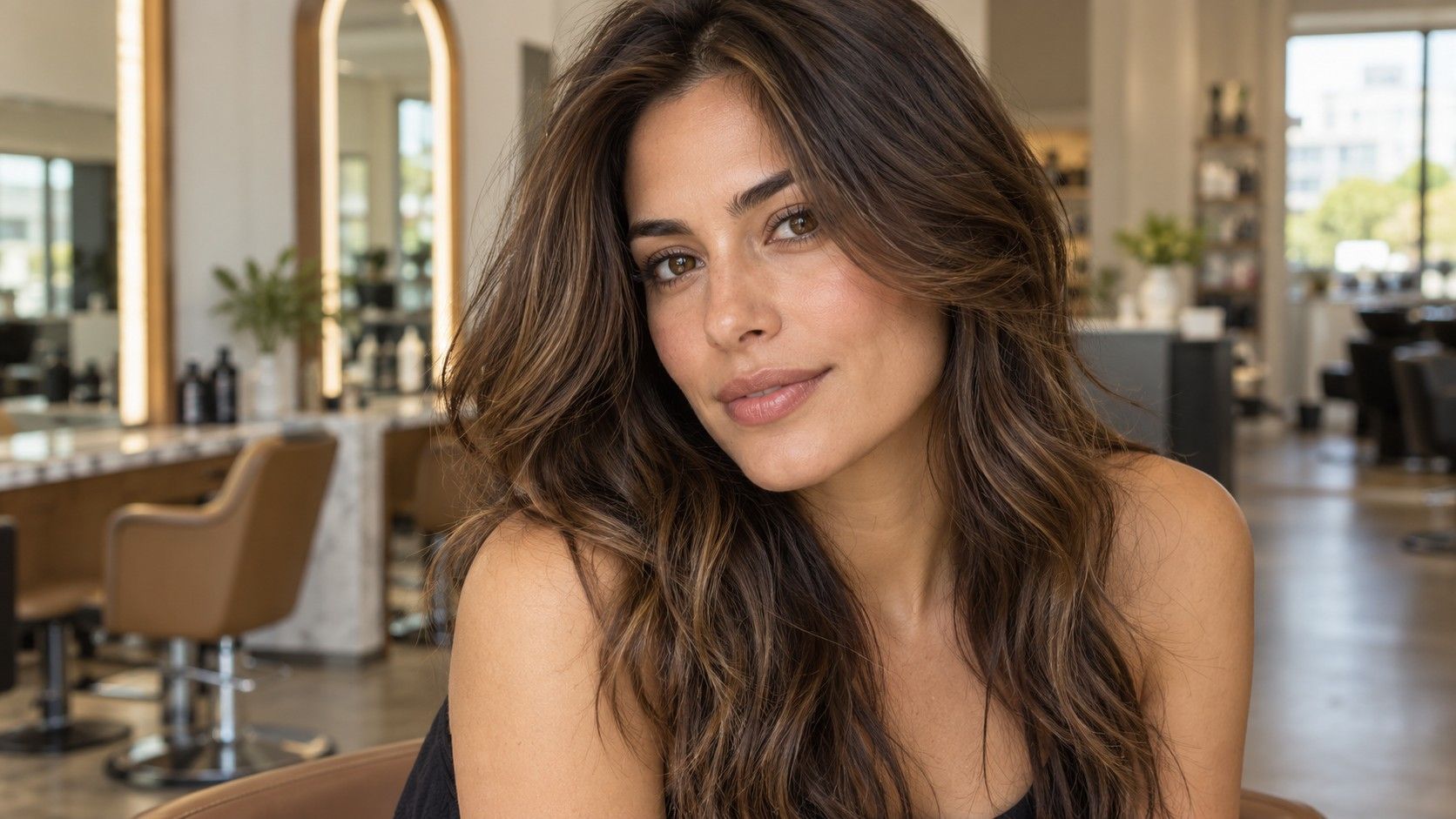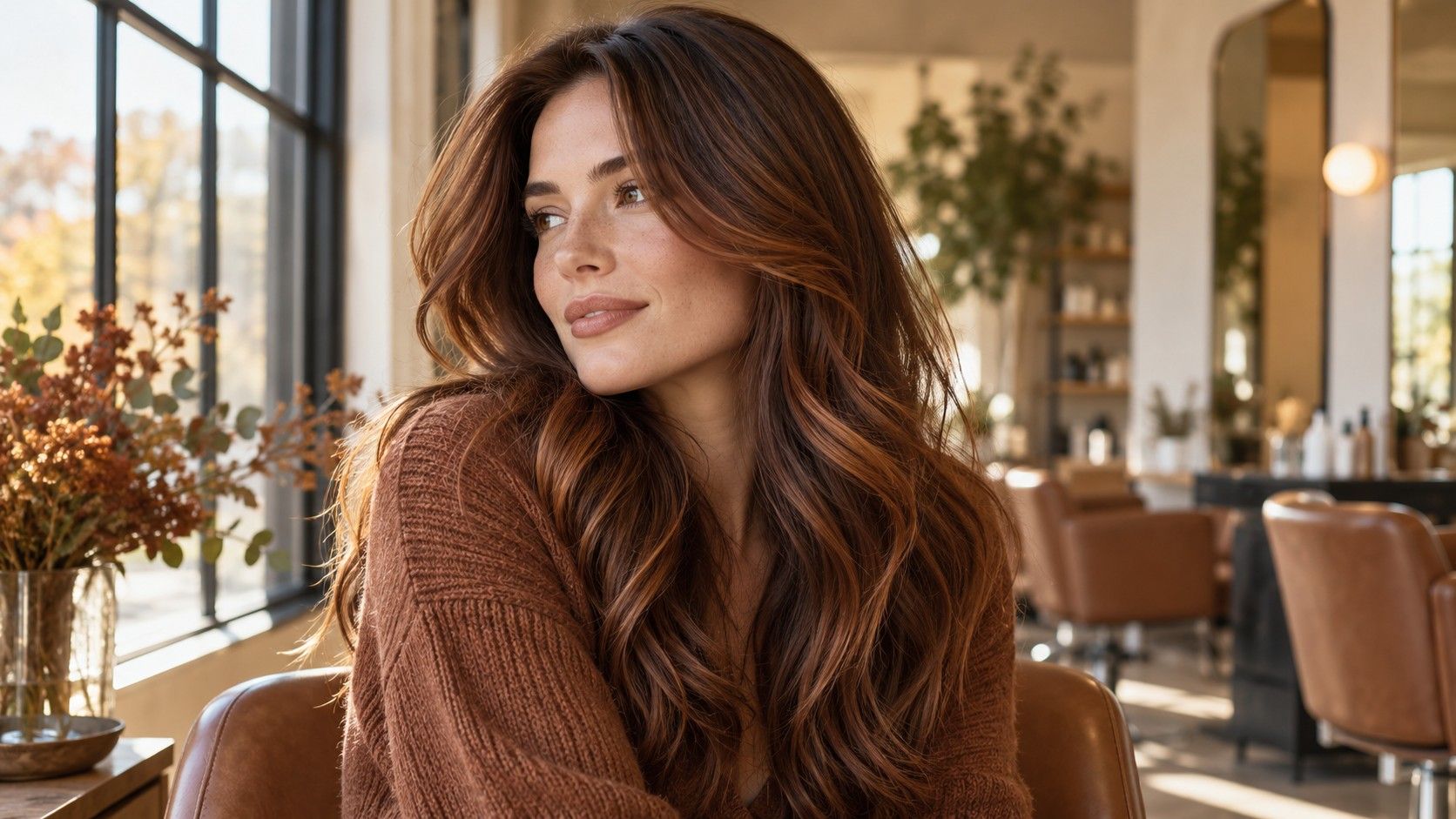
A person can be drawn to autumn colors and still feel lost at the salon: one reference photo shows honey blonde, the next deep mahogany, and both are called autumn. The useful choice is narrower. Decide how much depth, warmth and contrast you want near your face, then compare that with your starting color and the work you are willing to maintain. Hair colors for an autumn color palette should be a set of possibilities, not a diagnosis from a photograph.
Which autumn direction fits the color you already wear?
Soft, true and dark autumn are shorthand for different balances. Soft autumn usually calls for lower contrast and gentler, dustier warmth. True autumn makes warmth more visible, with golden browns and copper tones that read clearly. Dark autumn can carry richer depth while retaining a warm cast. These are comparison tools; hair or eye color alone cannot assign a season. Place a current daylight photograph beside three swatches from your actual wardrobe. If a softened olive top and a low contrast look feel coherent, a very bright copper may demand more attention than you want. If your best clothes are saturated rust and deep forest green, a pale beige blonde can look disconnected from that whole picture.
Your natural hair matters because it sets the size of the change. On medium brown hair, a warm chestnut gloss can be a subtle shift. On pale blonde, the same target is a much bigger move, especially when the roots return. Ask the colorist to show a reference at a similar starting depth and texture. A studio image with hard lighting can make brunette hair appear redder than it will in ordinary daylight. Save both an indoor and outdoor reference, and name the quality you like: soft, coppery, golden or deep. That conversation is more useful than asking for 'autumn hair' as a single shade.
Should you try brown before copper?
Brown is often the easier place to calibrate warmth. A walnut or chestnut direction can bring a golden or reddish cast without turning the whole head into a statement color. Copper is less forgiving if the amount of orange is wrong for your taste. Put the two shades next to your face in consistent daylight, ideally with your usual makeup and a neutral top. Do not judge from a tiny screen image with a warm filter. The decision is about whether you enjoy seeing warmth in the hair every day, not whether one photographed model looks good in it.
A brunette starting point also gives you more room to choose placement. Fine warm pieces around the face can change the impression without shifting all of the lengths. If you already have blonde highlights, ask how those lighter sections will take a red tone relative to the darker base; they may read brighter. If you have previous dark dye, lifting toward a luminous copper is a different salon project from adding warmth to undyed brown. Tell the colorist your color history before settling on a reference. A successful shade should make sense from roots to ends, not just at the front of one photo.
How much warmth is enough?
Names are unreliable. 'Caramel' might mean a muted brown ribbon in one portfolio and a bright gold stripe in another. Describe the result by comparing adjacent choices: a warm brown without orange, or a copper that stays brown in shade and shows red outdoors. Look at references in daylight and under ordinary indoor light. Warmth often appears strongest by a window, while a dim room can make a red brown seem nearly neutral. This is why two images of the same person can look like different colors.
If an all-over warm color feels too strong, keep the base near your natural depth and place warmth in smaller sections. If you dislike obvious highlights, ask for a blended result rather than a high contrast ribbon. Also consider your undertones in clothing, without turning them into strict rules. Someone who loves muted khaki and cream may prefer a quieter chestnut than someone who wears marigold and tomato red regularly. Your preference gets a vote. Seasonal labels are useful when they help narrow a decision; they are poor reasons to wear a shade you would never choose for yourself.
Will the new hair work with your clothes?
The most practical test happens in a closet, not on a color chart. Pull out a top you wear twice a week, one piece you always reach for when you want to look awake, and one color you find difficult. Compare your shade references beside those fabrics in natural light. A deeper brown may make cream and moss look grounded. A vivid copper can make those same pieces feel quieter and draw attention to the hair first. Neither effect is inherently better, but it should be intentional.
Think about your usual styling as well. Hair worn loose across the face contributes more color to an outfit than hair tied back. Strong, warm highlights framing the face may shift the balance even if most of the hair stays brown. If you wear cool black almost every day, a very golden result may feel separate from your clothes, regardless of whether a palette guide approves it. Bring a photo in your typical outfit to the salon. It gives a colorist context that a polished inspiration image cannot.
What will gloss and regrowth ask of you?
Any color plan should include a second appointment in your imagination. Roots are most obvious when the new depth differs sharply from your natural hair, while warm tones can change in appearance as they fade. A gloss can refresh tone, but ask how often your specific result may need attention and what is realistic for your budget. There is no universal interval. Hair history, washing habits, sunlight and the exact color used all affect how it wears. A low contrast chestnut near your base is often easier to live with than a dramatic shift from dark brown to bright copper.
Before leaving the salon, take a daylight photo and note what you actually like about the result. After a few weeks, compare it with the fresh image: is the warmth still in the right place, have the ends changed, and does the root line bother you? That evidence makes the next consultation precise. If you want to retreat to your natural color later, tell the colorist at the first visit; it may affect where they place highlights and how much of the hair they color. The best autumn choice is the one you still recognize as yours between appointments.