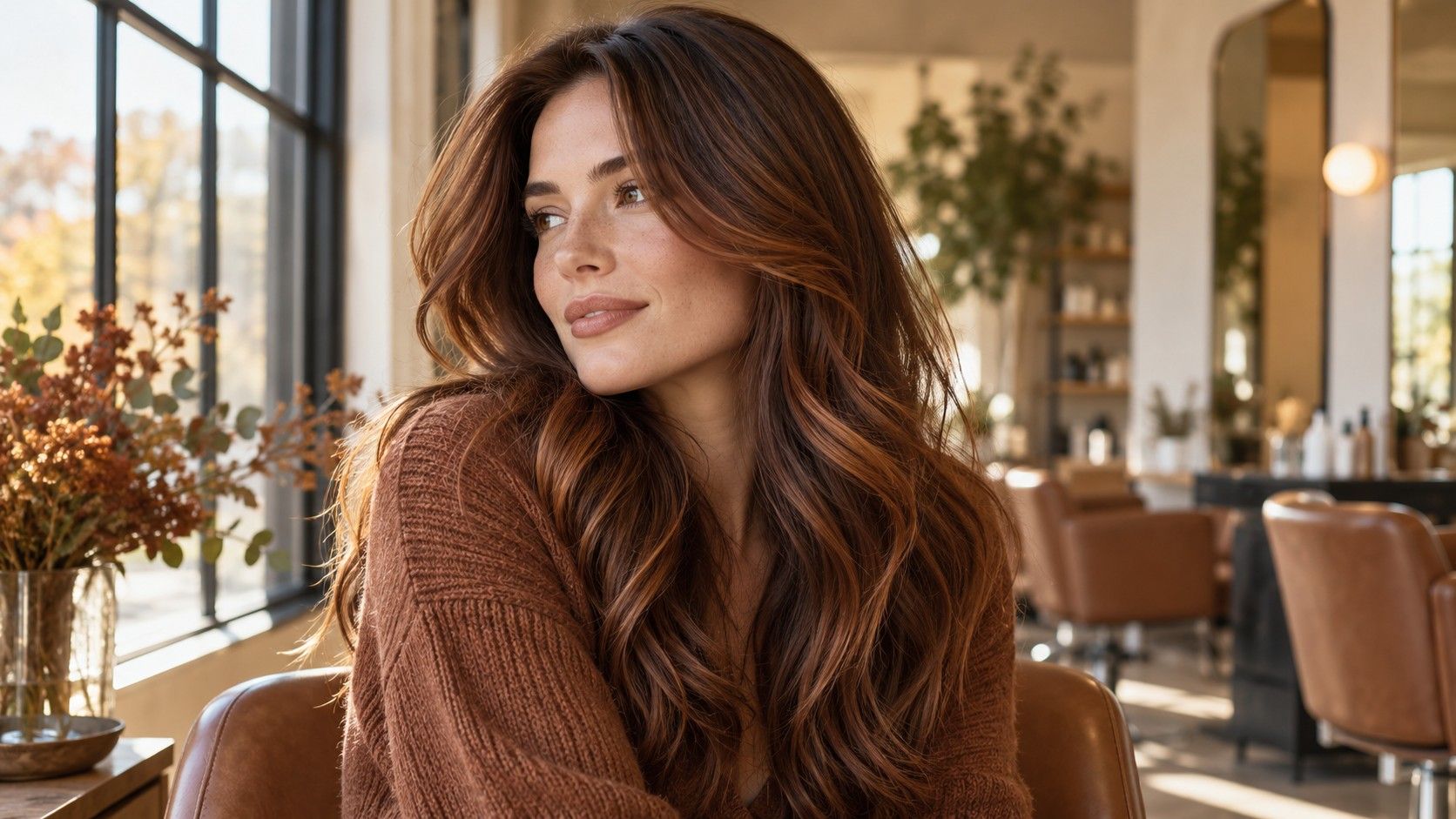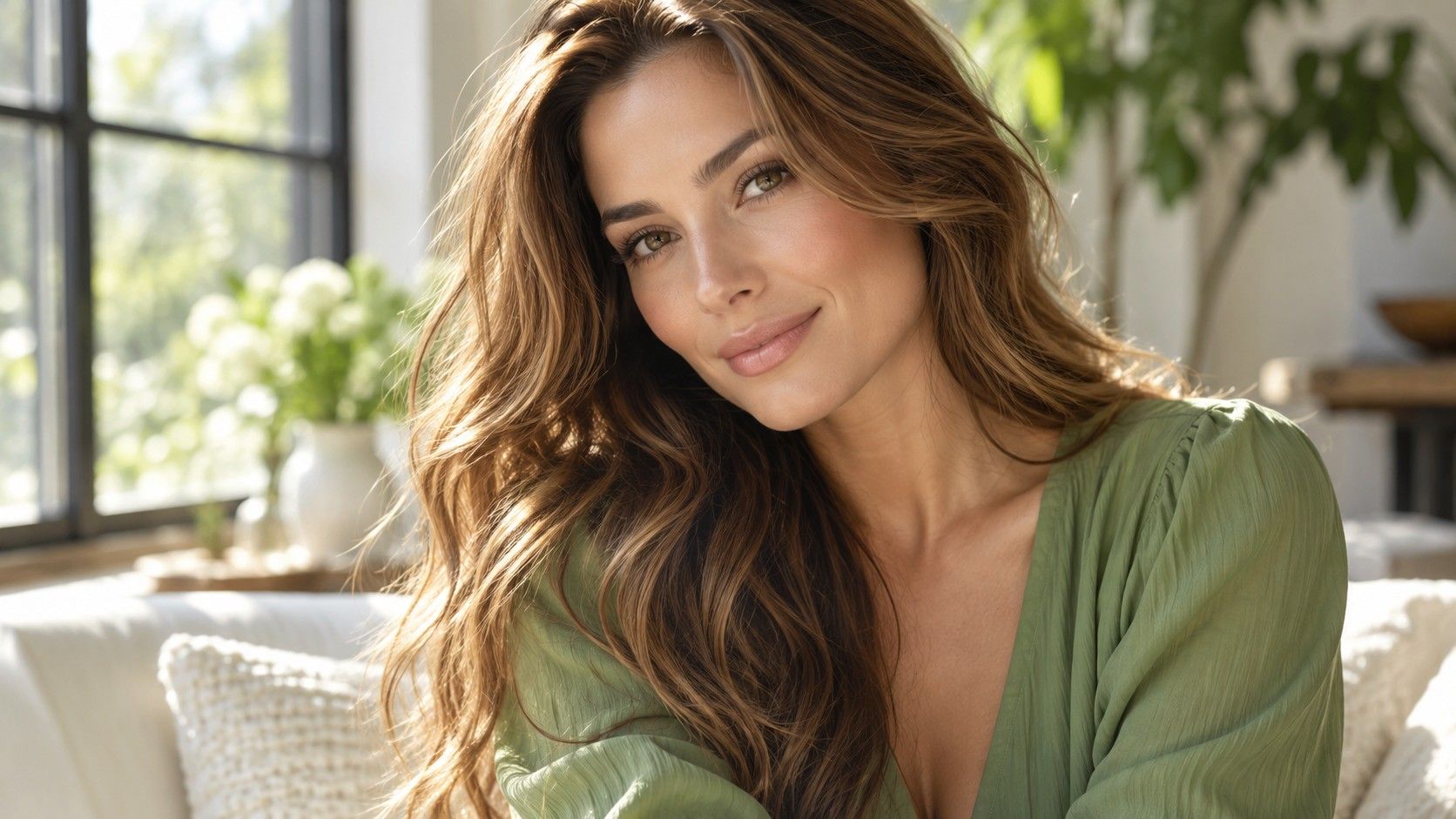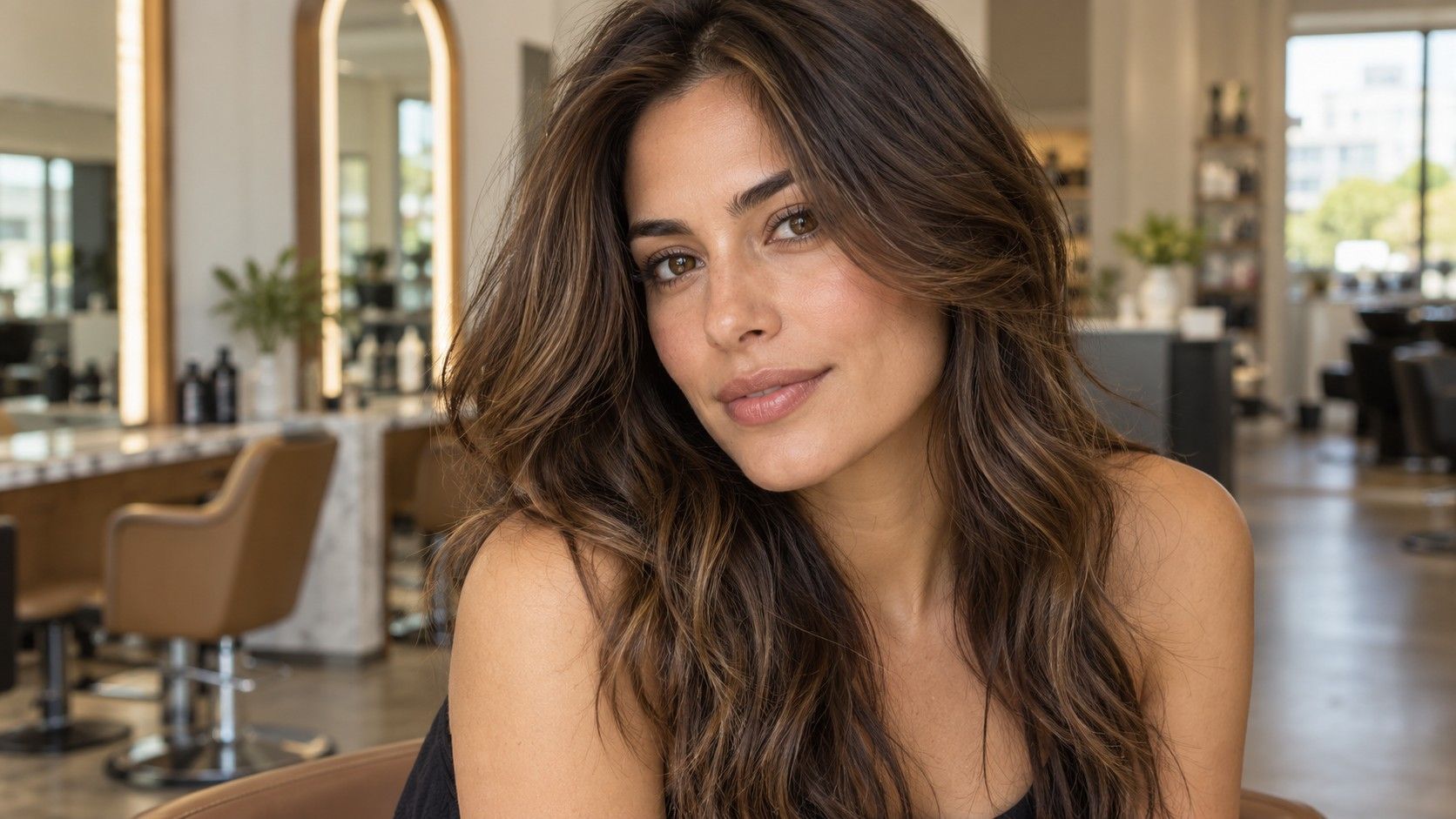
Brown hair and brown eyes can create a strong frame, while olive skin may look different under cool daylight and warm indoor lighting. A useful color palette compares the depth of the hair, the tone of the brown and the contrast of clothing near the face. No single season follows automatically from these three descriptions.
Look at olive skin under more than one light
Olive is a broad description, and its appearance can shift noticeably with lighting. A warm lamp may make skin look golden; daylight may show a cooler or more muted cast. Before choosing a hair swatch or a new jacket, photograph the face near a window and in the room where you usually get ready.
For a brown hair brown eyes olive skin color palette, compare two neutrals beside the face: perhaps cream and cool white, then chocolate and charcoal. Keep exposure and makeup consistent. Notice whether a color makes the skin seem clear to you or draws attention to uneven shadows. This is a personal visual check, not a medical or seasonal diagnosis.
If the photos conflict, trust what you see in person across several settings. Phone cameras adjust skin and hair differently; one frame should not decide a permanent color change. Make notes about the lighting alongside any swatch you save.
Neutral brown or a warmer brown?
Brown hair ranges from cool espresso to chestnut and caramel. A neutral medium brown can read almost cool next to a very warm coat, while the same hair appears warmer against charcoal. Compare shades at a similar depth first so a preference for lighter hair is not mistaken for a preference for warmth.
If your base is deep brown, small warm pieces can add movement without turning the whole head copper. If the natural color is medium brown, a richer chocolate glaze may provide depth with little visible lightening. Ask a stylist to show photographs that include roots and ends; close-up curls conceal how the overall brown relates to brows.
Look at the swatch beside skin in daylight, then with your everyday glasses or jewelry. A very ashy reference may feel flat on one person and elegant on another. A golden brown can feel lively or too orange. Describe the effect you want rather than relying on a shade name alone.
Place dimension where it will be seen
Face-framing pieces are a direct way to change what appears beside the skin. They can also become more prominent than expected when the hair is tied back. Try tucking the current hair behind the ears and note which sections stay visible. Show that view to the colorist before choosing placement.
Caramel ribbons through mid-lengths may look subtle on a dark base indoors and bright outside. A few fine pieces near the part can provide movement without a strong stripe. The amount of light hair matters: a reference with half its surface highlighted cannot be copied by asking for just two strands at the front.
If you prefer low upkeep, discuss a gradual transition from natural roots. A stark lighter hairline will announce regrowth quickly. A deeper starting point and scattered dimension may sit more comfortably between appointments, depending on your cut and how fast you notice the change.
Coordinate the neckline with hair contrast
A dark brown crown and brows already add definition around the eyes. A black top may extend that contrast; a cream top may soften it. Hold both under the chin in daylight and step back. The useful question is whether the garment supports the face or becomes the strongest visual element.
Try a rich green, burgundy and muted blue at similar darkness. Differences in saturation can be more obvious than differences in hue. Olive skin does not require one universal set of earth tones. If a warm orange makes you look tired in your own mirror, keep it away from the face regardless of an online chart.
Large earrings, glasses and lipstick alter the frame too. A high-contrast outfit that feels harsh without accessories may work well with them. Build a palette from outfits you will actually repeat rather than judging loose fabric squares in isolation.
Give the stylist useful references
Bring a daylight photo of your current hair, a reference for the depth you want and a second image showing the amount of warmth you can tolerate. Add one example that is too light or too copper. These boundaries make the conversation clearer than a single celebrity photograph.
Disclose previous color and describe how often you can return for maintenance. Ask how the proposed shade will look at the roots after some growth and whether the ends might need a different approach. A realistic consultation is about your starting hair and schedule, not a guaranteed copy of an image.
Keep the seasonal label optional. Brown eyes and olive skin cannot establish a season on their own. Choose a brown hair plan and clothing colors that you have compared in your own light, then adjust one variable at a time if the result feels off.
Build a repeatable comparison, not a verdict
Lay out the clothes you already wear near your face: a light neutral, a dark neutral, a warm color and a cooler one. Photograph each with the same hair part and similar makeup. The comparison is small, but it is grounded in garments you may actually put on tomorrow.
Record the effect of depth separately from warmth. You might prefer dark navy to pale blue because of contrast, while still liking a warm olive green. One seasonal label cannot always summarize those decisions. Notes such as deeper color helps the eyes show are easier to use in a shop.
If you plan to lighten the hair, repeat the clothing comparison afterward. Caramel at the front can make a cream neckline feel different, while a deeper chocolate finish may increase the contrast you like with pale tops. Change one piece of the palette at a time rather than replacing it wholesale.
A friend or stylist can give a second view, but your daily experience is part of the evidence. Keep the colors that feel comfortable in daylight and in your routine. The purpose of the palette is to make getting dressed and discussing hair easier, not to prove a diagnosis.