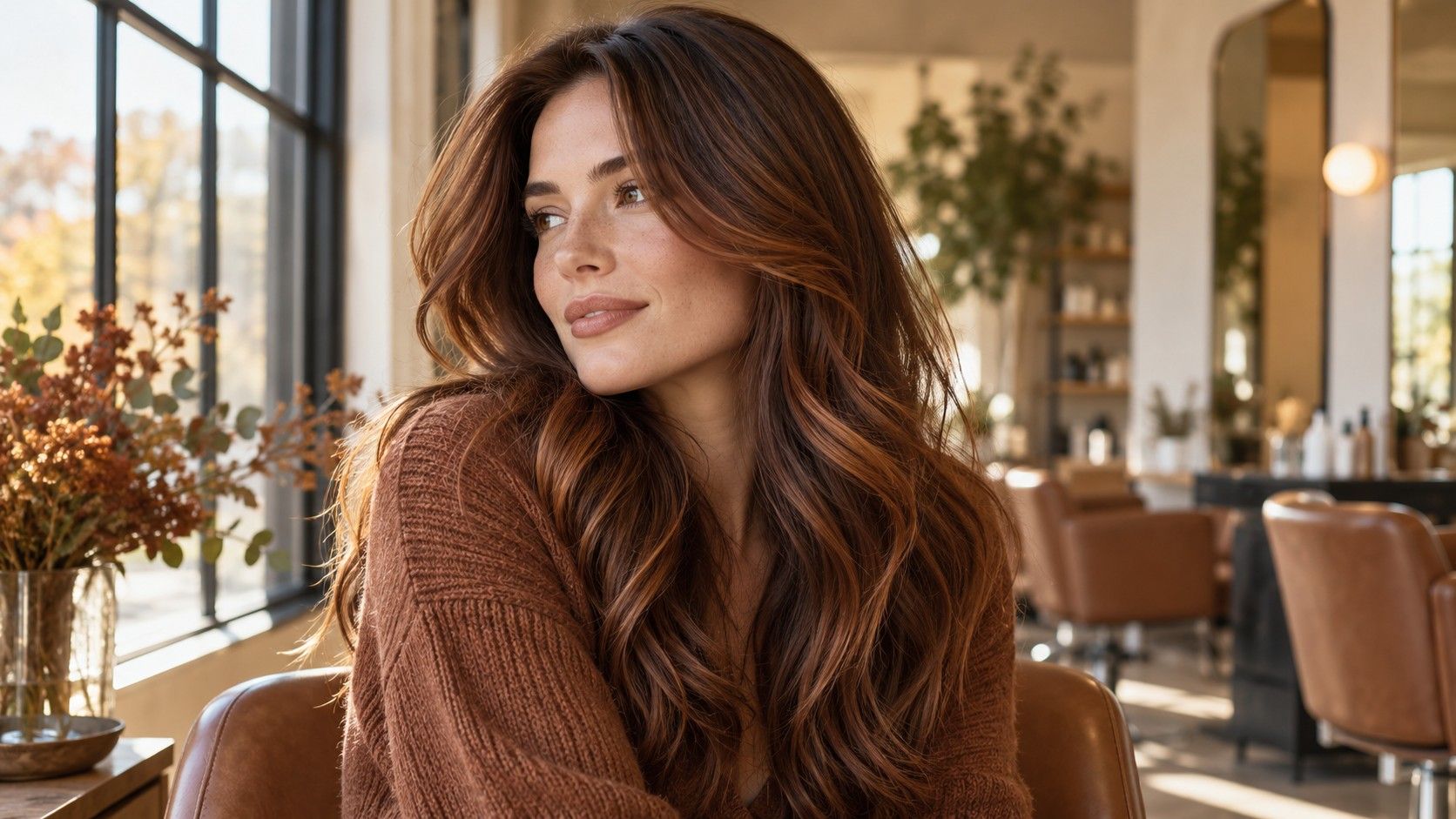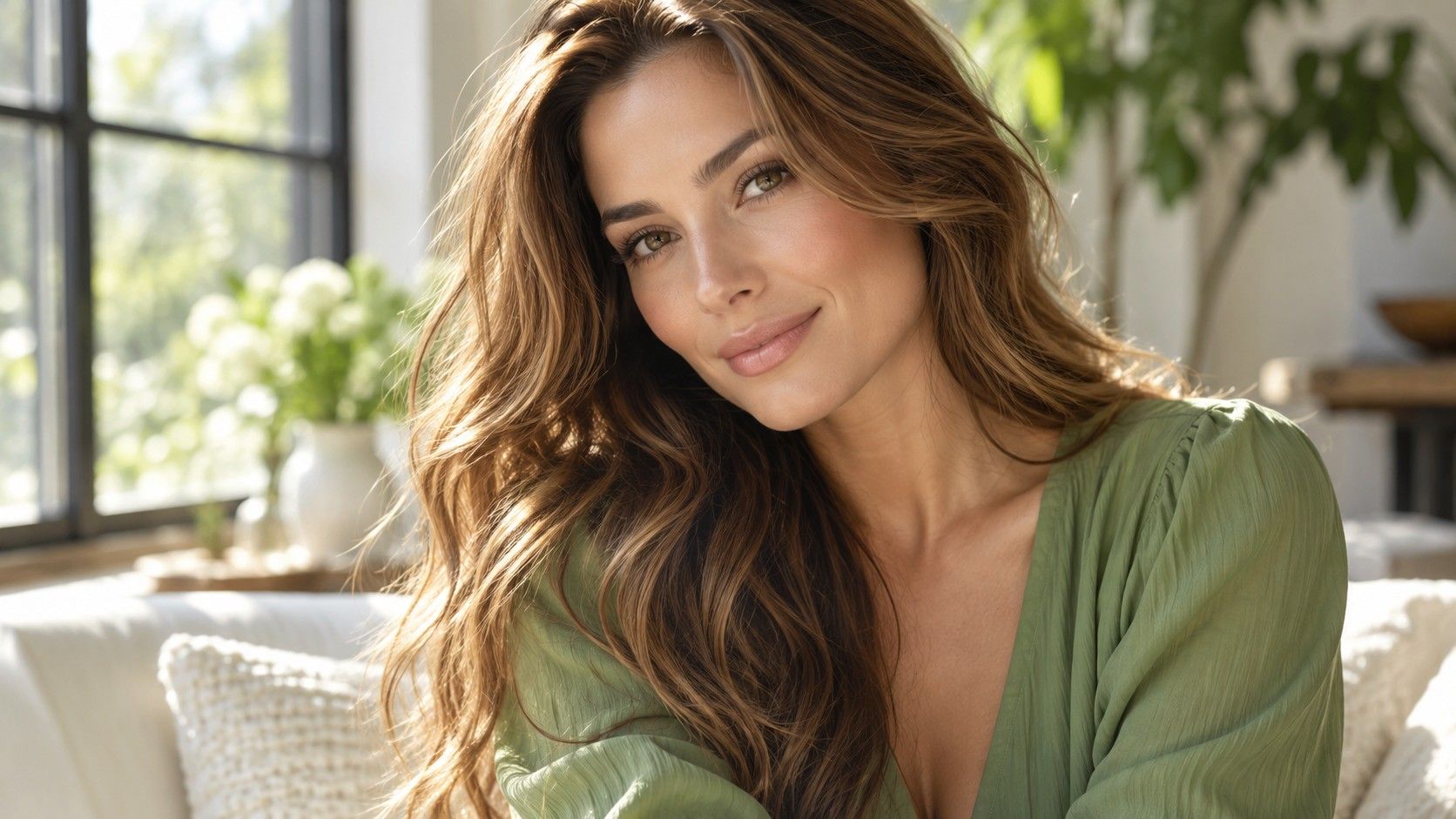
Warm hair can mean a quiet chestnut reflection or unmistakable copper. Start with the difference you want to see in daylight, then consider your natural depth and the time you want to spend maintaining it.
Reading warmth in ordinary daylight
A true autumn hair color palette is usually discussed in warm terms: gold, chestnut and copper. Those words are broad. A chestnut photograph under yellow salon lamps may look far redder than it does near a window. Collect at least one image in indirect daylight and compare it with your present color before choosing a direction.
Warmth can sit in the overall base or in selected strands. A deep brown with a subtle amber reflection is a different choice from an all-over copper brown, even if both belong on the same inspiration board. Ask what you want people to notice first: a richer brown, a visible red note, or lighter golden movement.
Look at roots and ends separately. Prior lightening can make ends appear more vivid than the darker growth. A colorist needs that history to explain what can look even after one visit and what might require a staged plan.
Another useful check is the clothing in your reference photograph. If a white shirt looks yellow, the entire image is probably warm-lit. Compare the hair against a neutral background or find a second photograph of a similar shade. This prevents a lighting effect from becoming the target color.
Choosing chestnut or copper
Chestnut works well as a reference when you want warmth but still want the hair to read brown at a glance. Copper takes the warm element to the front. Put the two images beside a neutral brown photo; this makes the difference in red and orange easier to discuss than a long list of shade names.
If your natural base is dark, a bright copper reference may involve a larger change than a chestnut gloss or dimension. That affects the look of new growth. If your hair is already light, a copper result may be visually easier to reach but more noticeable as it changes between appointments.
Neither option is a test of whether you belong to a season. Think about your clothing colors, makeup habits, and tolerance for visible warmth. A person who loves the idea of copper on a screen may discover that a quieter brown with copper glints is easier to live with every morning.
Chestnut is also a safer word when you want a warm brown rather than red hair, but say what you mean by it. Some examples lean mahogany, others golden. Put a clear copper image beside your preferred chestnut and explain which part of the copper you would like to keep, if any.
Keeping brunette depth without losing movement
Dark warm brunette can become visually solid when every strand is the same depth. A few restrained lighter pieces can reveal the shape of a cut and the movement of curls. They need not be bright gold; compare references where the lightest piece is still recognizably brown.
Check the part line and the front section in your saved photographs. If your own hair is deep brown, a strong golden ribbon at the face can feel disconnected from the rest. A softer transition often keeps the richness you came for.
Ask to see an example on a similar starting depth and texture. Smooth straight hair displays broad blocks of color clearly; waves break the color into smaller reflections. The reference image should help decide placement, not merely supply a shade name.
For naturally dark hair, ask whether movement can come from subtle shifts in depth rather than very light highlights. The result may read richer up close while remaining predominantly brunette from a few steps away. That can be a better match for someone who wants warmth without an obvious striped pattern.
Deciding how much highlight is enough
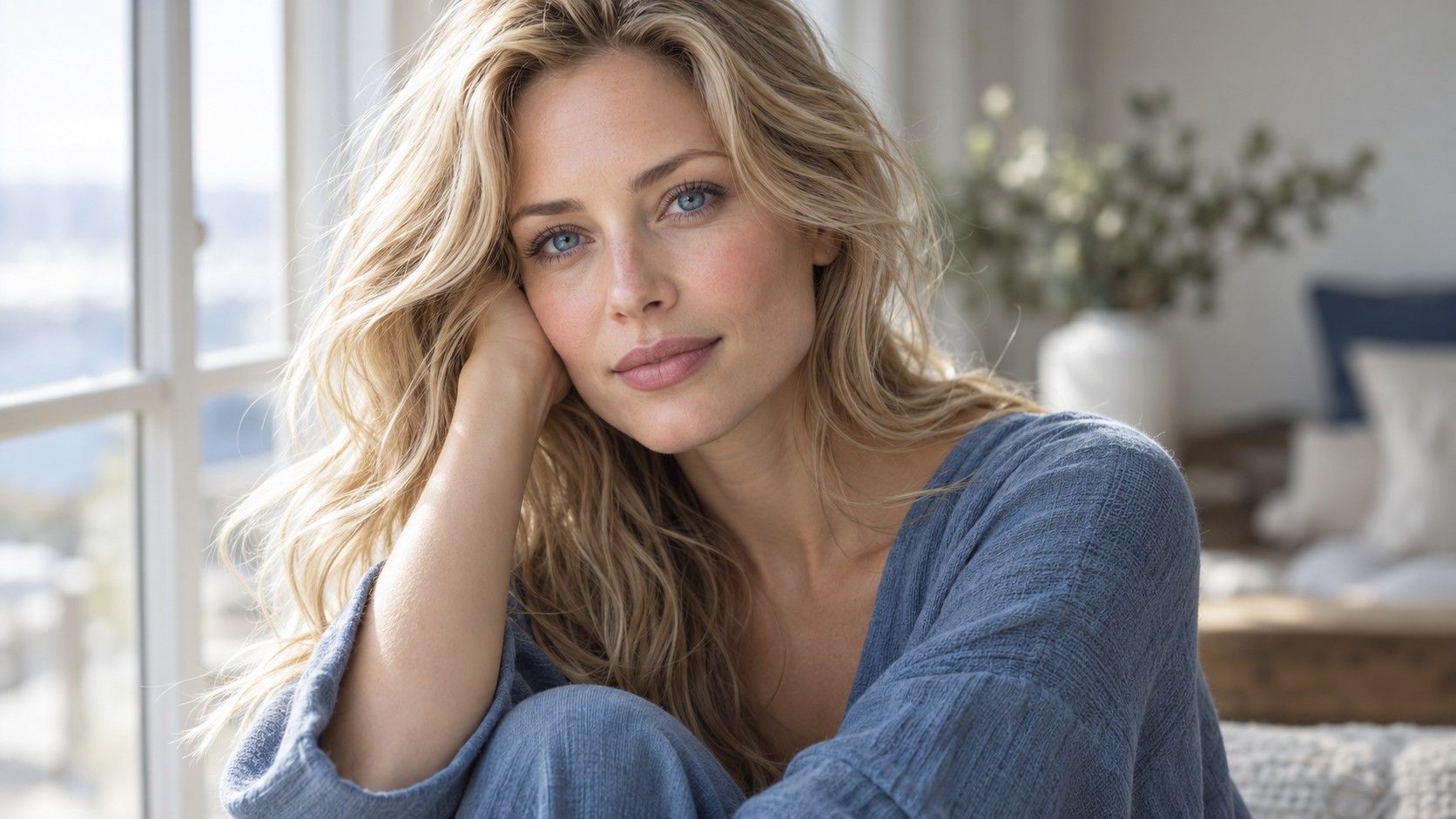
Golden highlights can make a warm palette lively, but a heavily lightened look may be far from the chestnut image you first saved. Before the consultation, mark the brightest part of each reference and note how much of the head it occupies. That simple check separates a few glints from an all-over light result.
A face frame changes what you see in the mirror more than hidden pieces near the back. If you are uncertain, ask about a restrained placement that leaves the base dominant. You can evaluate how you feel about warmth near your face before making the whole style brighter.
Compare the proposed highlight with your roots. A very pale gold strand next to dark new growth will announce itself quickly. If easy grow-out is important, discuss where the brightness begins and how the transition is blended.
Notice whether the golden pieces in a picture begin near the crown or lower down. Brightness at the crown changes the entire look, while lighter lengths preserve more of the natural base near the face. Both can be attractive; they also grow out differently and deserve separate discussion.
What fading means for your schedule
Warm colors can change in appearance as the initial finish wears and as daylight changes. Ask what the colorist expects the shade to look like after a few washes and which part of the effect may need refreshing. This is more useful than asking only how long a color lasts, since the answer depends on starting hair and the work performed.
Keep one unfiltered daylight photo from the first week and compare it with a later photo in similar light. A kitchen lamp can make a gentle chestnut look orange; a cool office lamp can make it look dull. Consistent light gives you a fairer view of the change.
If you prefer a low-commitment schedule, tell the stylist before choosing the brightest copper in the book. A deeper chestnut with limited warm highlights may better match the time you want to spend maintaining it. The palette helps narrow the look; your routine decides whether it is practical.
If you have an important event coming up, leave room for a daylight check before the date. Hair can appear markedly different under salon lamps and in outdoor photographs. A measured change gives you time to decide whether you want more copper at a later visit instead of making every choice in one sitting.