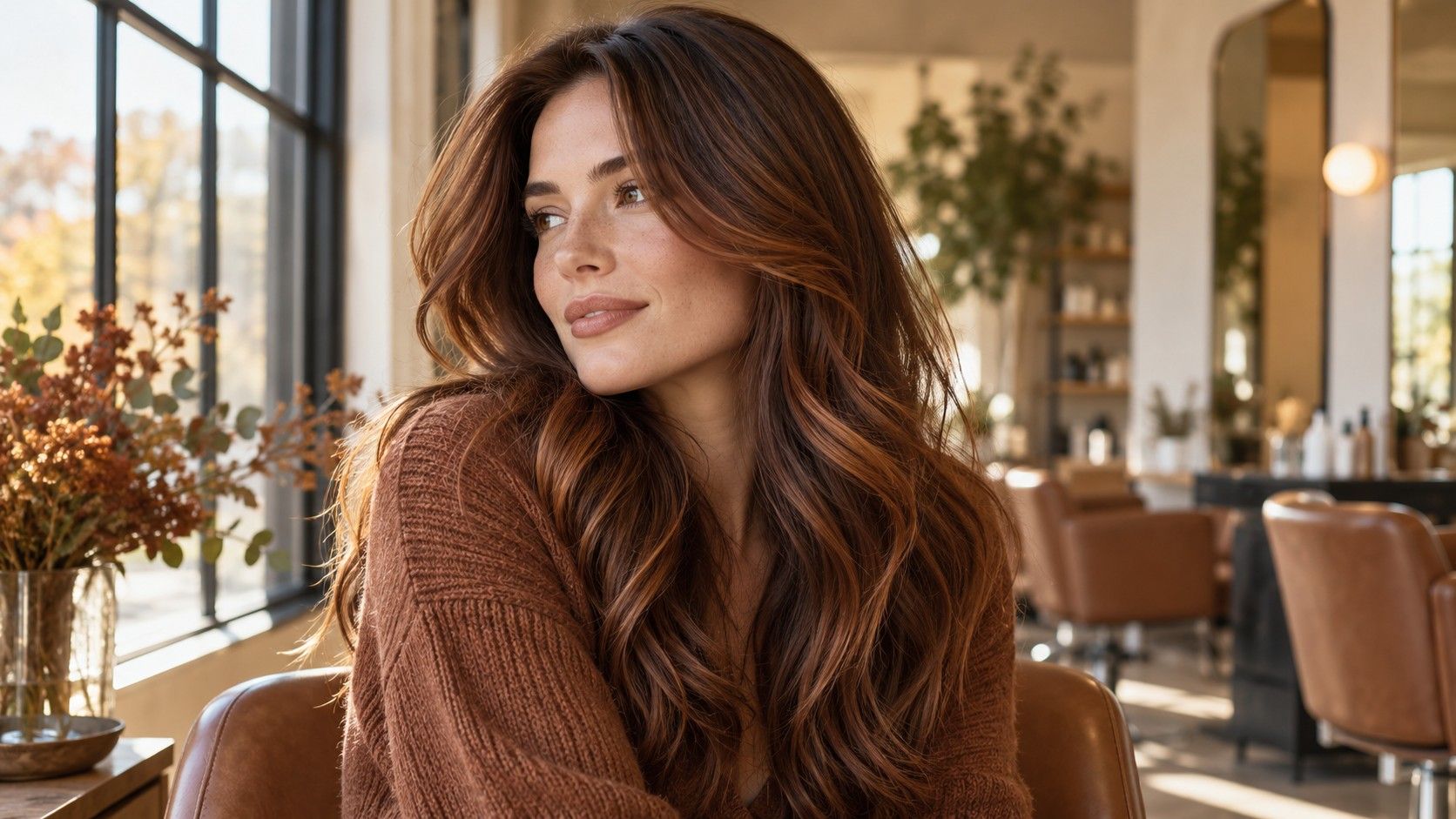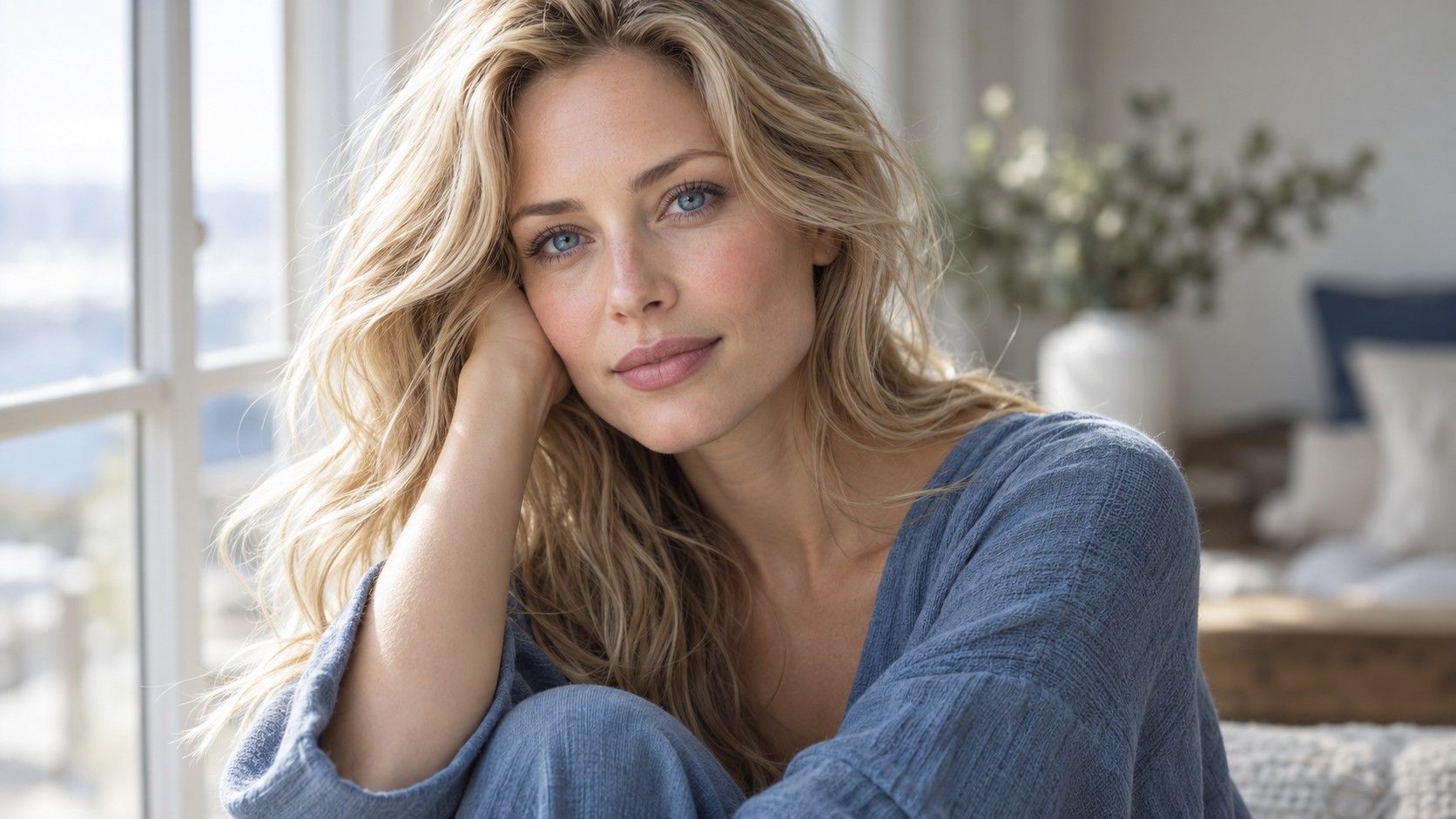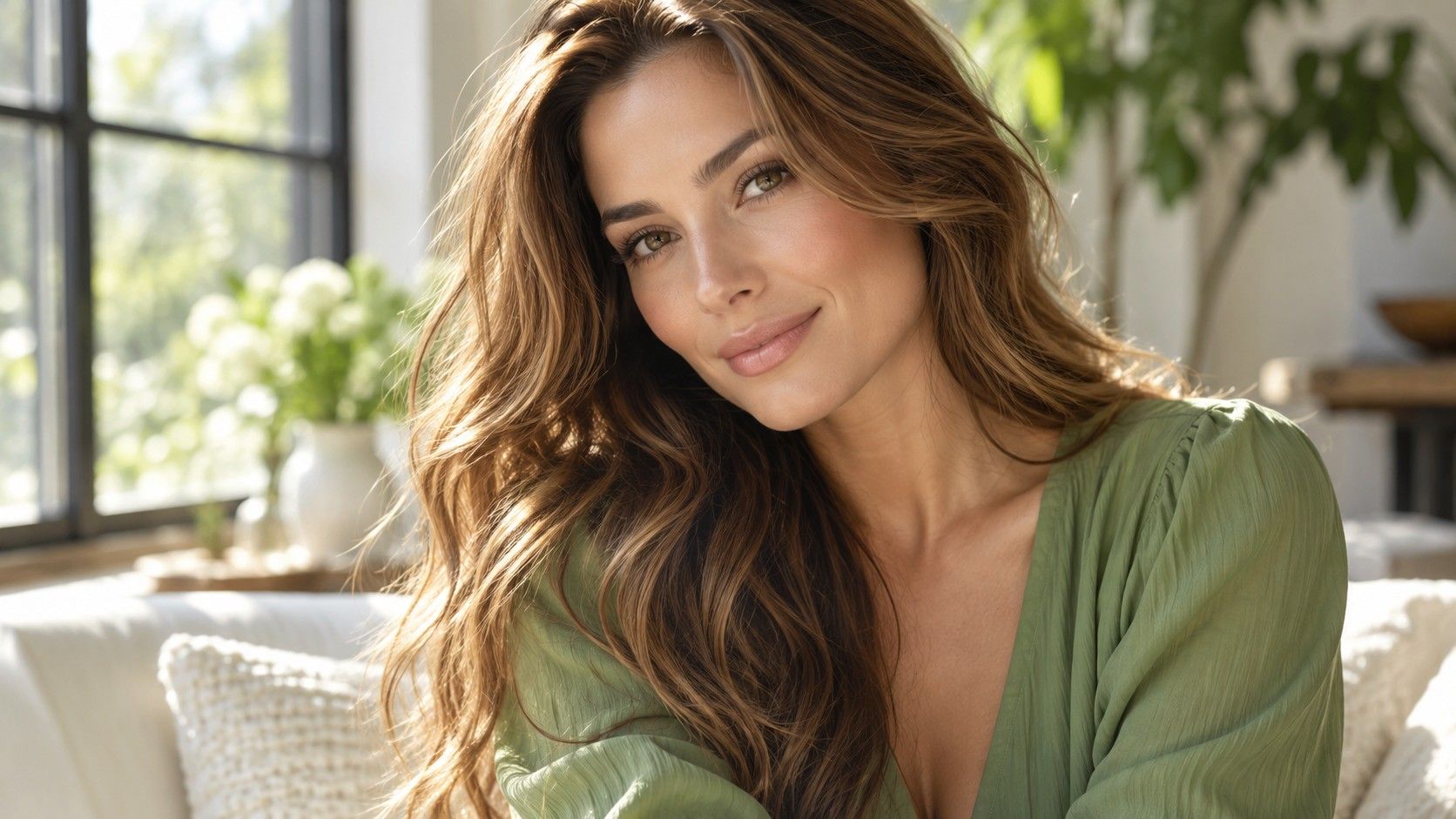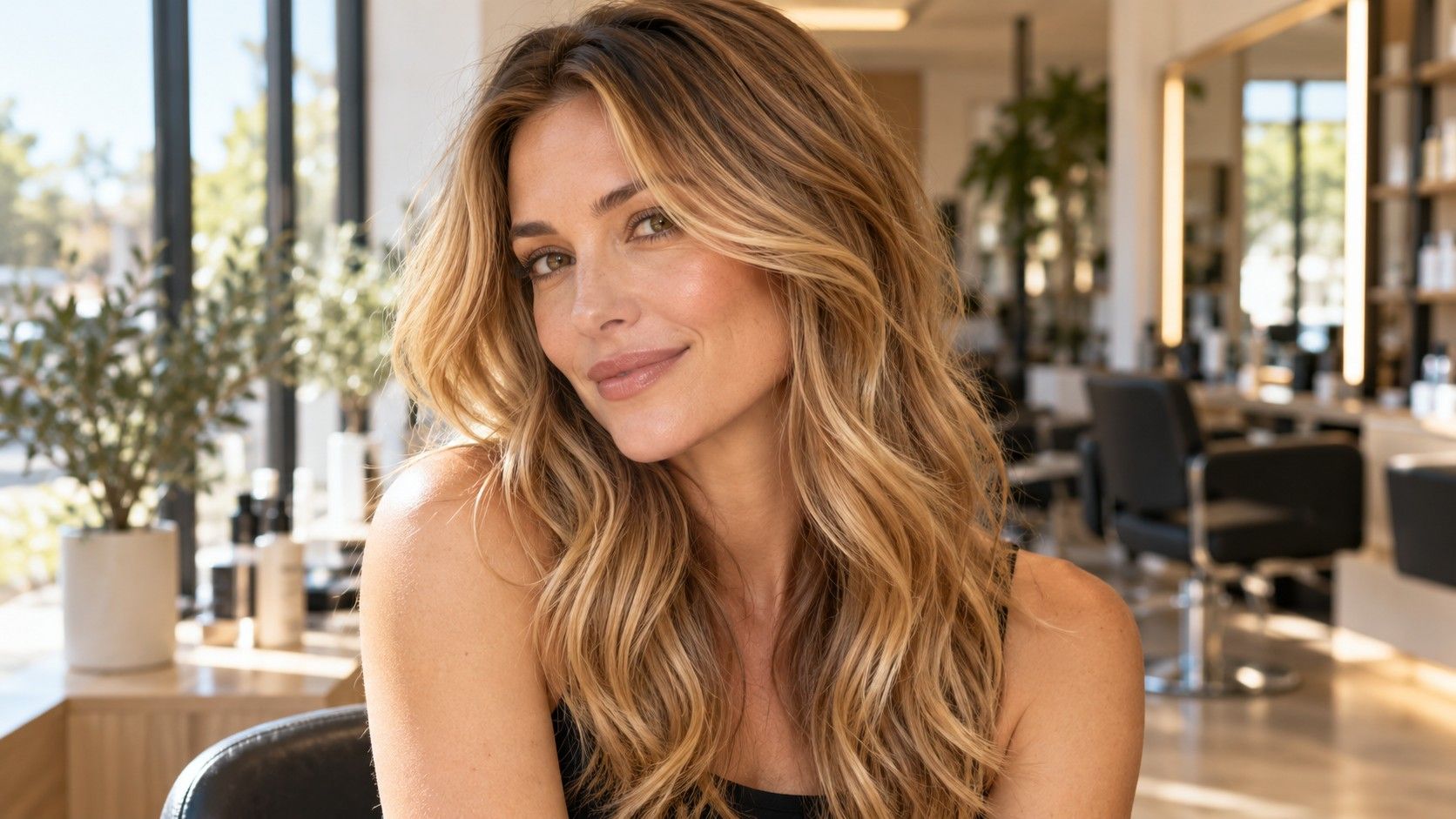
Golden blonde can look rich or oddly flat depending on its depth and the color left at the roots. When planning a True Autumn inspired blonde, compare honey, caramel and darker golden tones in daylight. The best reference is one that shows the entire head, including regrowth, rather than a polished close-up of a curl.
Honey or caramel: which warmth belongs in the picture?
Honey blonde usually reads lighter and more golden; caramel often carries more brown depth. Those words are loose salon shorthand, so ask to see actual swatches or photographs at comparable light levels. Under warm bathroom bulbs both can look almost coppery, while a window may reveal a substantial difference.
If your natural color is medium brown, caramel highlights can look connected to it from the first day. Honey around the face makes a stronger change. A dark blonde base may accept honey more quietly. Compare the options beside your normal clothing: a rust sweater can make warmth feel coherent, while a cool white shirt exposes any orange cast that bothers you.
For true autumn blonde hair, depth often does as much work as gold. An extremely pale yellow blonde may lose the grounded effect you liked in a deeper reference. Point out whether you are drawn to the bright ends, the warm brown shadows, or the transition between them. That gives the stylist a useful proportion to plan.
A root that makes the blonde believable
Roots are visible in almost every ordinary hairstyle. In a loose wave they form a narrow shadow; in a ponytail they can become the dominant color. Bring a photograph of how you actually wear your hair to the consultation, and check where the lighter strands begin when it is pulled back.
A root close to your natural shade can make the grow-out feel gradual and preserve depth around the face. A root painted much darker creates deliberate contrast and a more obvious line later. There is no universal autumn root color: the useful question is how much distance you want between the scalp and the golden lengths.
If you have a few lighter or gray strands at the hairline, discuss how those will sit with the planned root. A photo of a seamless brunette-to-blonde transition might rely on a different natural starting point. The salon needs to see yours in daylight before promising the same result.
Check warmth against your skin in more than one light
A warm blonde can brighten a face in one photograph and seem too orange in another. Compare a golden swatch near the cheek in indirect daylight, then under the lights where you spend time. Remove strong camera filters and keep makeup similar between pictures. This is a practical color comparison, not a diagnosis from skin, hair or eye color alone.
Warmth is also a range. Beige-gold, honey and copper-gold do not create the same impression. If copper makes the skin appear more flushed to your eye, say so plainly. If a muted gold makes the whole look seem dull, ask to compare a slightly cleaner honey at the same depth rather than jumping several levels lighter.
Try the comparison with your usual glasses or earrings. Metal frames and jewelry sit near the hairline and can alter what feels harmonious. The point is to judge a complete, wearable image; the tiny isolated strand on a white card will not tell the whole story.
Highlights or a full blonde change?
Highlights let you keep a substantial part of the natural base. They can make a dark blonde or brunette appear warmer without requiring every strand to match a reference photograph. An all-over blonde makes the golden tone the background color, which may be exactly what you want if the starting shade feels too dark.
Compare two photos with similar hair length, one with ribbons of caramel and one with a uniform golden finish. Look beyond the face to the underside and ends. A few light pieces across the top can look far brighter in a styled photograph than they do in straight hair on an ordinary day.
Ask the stylist what each option would mean for visible regrowth and future changes. If you are unsure about warmth, starting with a smaller placement leaves room to assess it in your own light before making the whole head golden. That is a design decision, not a claim that one path is safer for every hair type.
Plan for the color after the salon day
Golden color changes as it grows and as the finish wears. Ask what a tone refresh would involve for your hair and how the salon expects the shade to look between appointments. Your current hair history, water, styling and exposure vary; a fixed calendar quoted from someone else is rarely a useful promise.
Keep a daylight photo from the day you liked the result, then take another after several weeks in the same place. It helps you explain whether you miss the original warmth, the gloss, or the depth near the roots. Those are different adjustments for the next appointment.
If a visit every few weeks would become a nuisance, say that before the first service. A slightly deeper golden palette with a natural anchor may fit your routine better than the brightest honey image. The right blonde is the one you recognize in the mirror during an ordinary month, not only under salon lights.
Bring a reference that shows ordinary hair
A golden shade photographed with heavy shine and warm lighting can be difficult to translate into a real consultation. Look for at least one image in neutral daylight, preferably with the roots and underside visible. Mark the gold you want and the amount of brown you want to keep.
Photographs with curls can make thin highlights appear like broad bands. If your hair is usually straight, compare the same kind of color on straight hair too. Notice whether the lighter pieces still create enough movement without the styling separating them into ribbons.
Ask whether the stylist expects your existing ends to reach the same warmth as the roots. Earlier color and dryness may affect their appearance. A sensible first appointment might aim for a coherent blend rather than identical gold from scalp to tip.
Keep a sample of the clothing colors you wear most near your face. You do not need a complete autumn wardrobe to choose hair, but a cream shirt, favorite green top or brown coat can reveal whether the proposed blonde feels like part of your existing look.