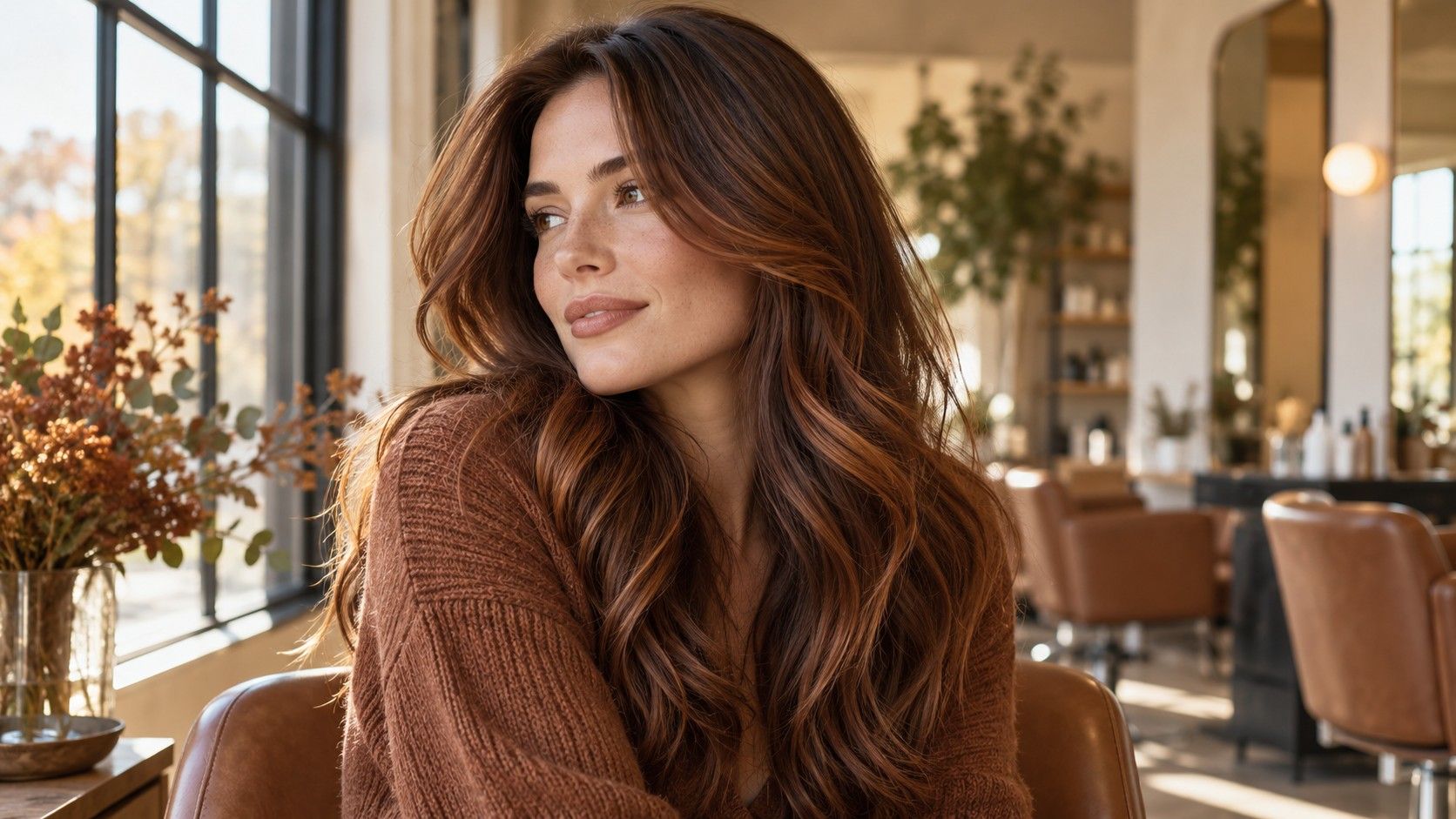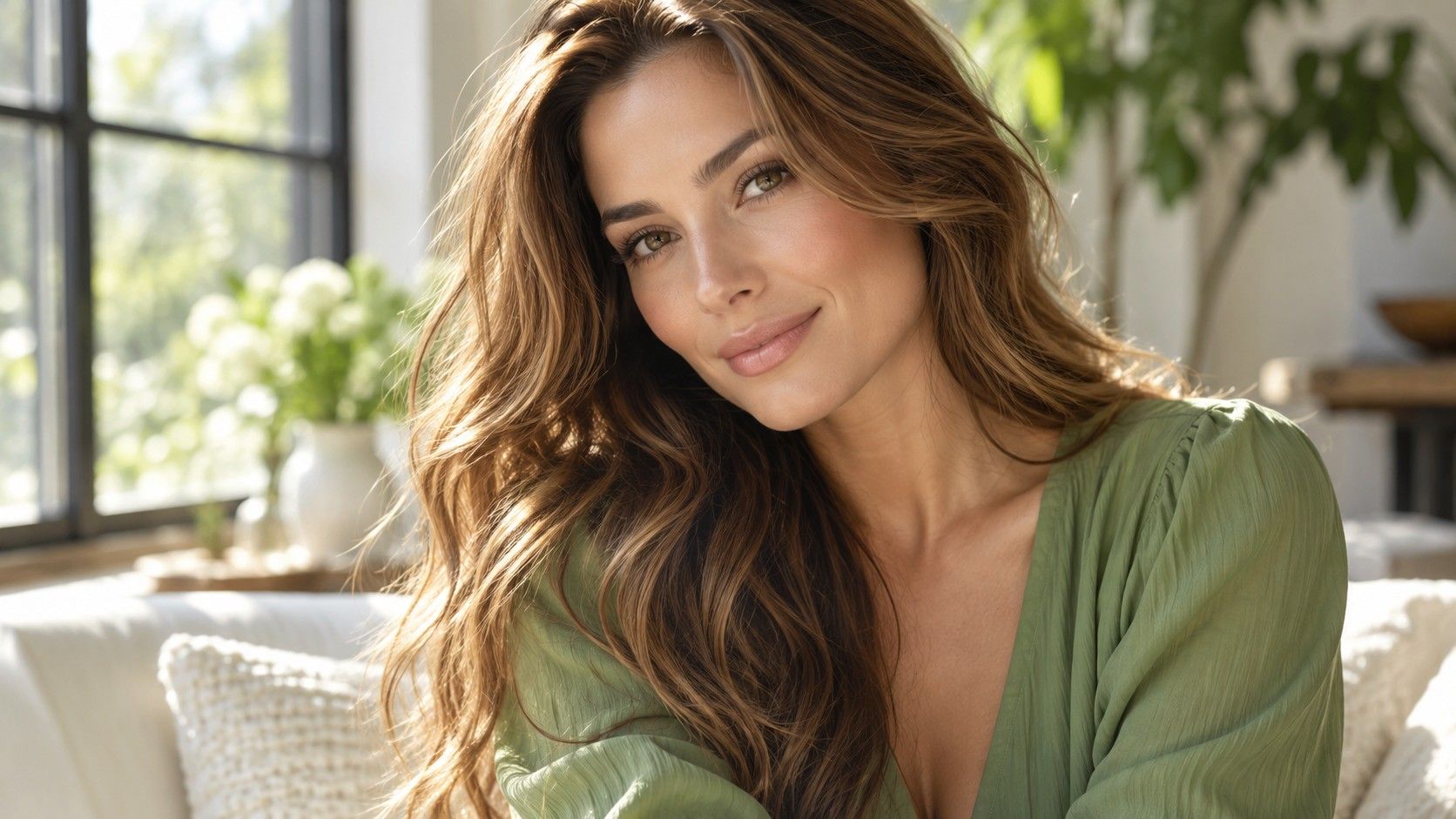
A cool winter hair color palette often shows polished dark hair and sharp light accents. The photographs look decisive; the salon decision is less simple. A deep brunette, near black and light cool pieces can each change the contrast around your face in a different way. Start with the color you have, then decide how crisp you want the result to read in daylight and how visible a growing root you can accept. The season name is a useful design reference, not proof of what will suit every person.
Is your current dark base cool enough?
A cool dark base does not require blue black dye. A neutral to cool brown may give the clear outline you want while leaving room for natural movement in the hair. Hold a reference beside your current color in daylight. Look at the mid lengths and ends as well as the roots; old highlights can make the ends warmer than the crown. If you have colored the hair before, say so at the consultation. A colorist needs that history to judge how evenly a cooler result can be achieved.
Look at the shade with your regular clothing. A charcoal coat, white shirt or deep berry top can reveal whether the hair has the crisp relationship you like. If the brown looks reddish beside those colors, you may want a quieter tone. If it looks too flat, depth and placement may be the issue rather than warmth. Do not rely on a single photo under fluorescent light, which can make even neutral hair appear greenish or dull. An outdoor image in open shade and an indoor image together are a better basis for discussion.
Brunette or near black?
A dark brunette usually keeps more visible dimension, especially when the hair catches side light. Near black gives a stronger graphic edge, but it can dominate a pale outfit or make roots more obvious if the natural color is much lighter. Try both tones near your face using swatches or temporary visual references under the same light. Compare with the neckline colors you actually wear. A striking portrait online may depend on professional lighting, makeup and styling that are absent on a weekday morning.
The path back matters. Going substantially darker can be easy to request and slower to undo. If you feel uncertain, ask about a first step that stays close to your natural depth. For some people, a cool dark brown delivers the definition they hoped to get from black without creating such a hard boundary as it grows. Others actively want that boundary. State your preference clearly rather than using 'winter' as shorthand. Also ask how the color will look when tied back; dark roots and lighter ends can change the overall impression dramatically.
Would a light accent help or interrupt the shape?
A few cool light pieces can add movement to deep hair, but their placement decides whether the result remains crisp. Thin accents around the face are immediately visible; subtle interior pieces appear mainly when the hair moves. Large pale ribbons against black can become the first thing anyone sees. Save images with both the amount of lightness you want and an example that goes too far. That helps establish the boundary without relying on vague terms such as 'a little highlight.'
Choose the tone with the same care as the position. A cool light accent might be soft beige or a deeper ash brown, depending on the base and the level of contrast you prefer. Very pale silver is a more dramatic commitment and can require significant lightening and upkeep. On previously dyed dark lengths, achieving it may take a staged plan. Ask what the first appointment can safely deliver and how the lighter pieces will look between tonal refreshes. The practical goal is a deliberate pattern, not a perfect imitation of a filtered photograph.
Does the contrast work outside studio light?
Studio images can make hair look darker, skin brighter and highlight edges cleaner. Check your references in open daylight, a bathroom mirror and the light where you usually work. In one setting, a dark brown may read almost black; in another, its brown dimension becomes obvious. Take photographs from the front and side, because the light pieces may appear balanced from one angle and heavy from another. Use the same neutral top each time so clothing does not change your impression.
A winter palette is often associated with high contrast, but you do not have to maximize contrast to use it. If your everyday look is minimal, a cooler brunette might sit naturally with white and navy without the extra impact of pale highlights. If you prefer a graphic wardrobe, stronger dark and light separation may feel intentional. This is personal styling, not a season diagnosis. Ask yourself whether you like the hair alone and as part of an outfit. Both answers matter.
One practical comparison is to cover the lightest parts of a reference with your hand. If the dark base suddenly looks right, you may need less highlighting than the photograph suggests. If it looks heavy, a small amount of light near the part or face may be enough. Keep the discussion tied to where you want that relief, rather than to a generic winter palette image. A few centimeters of placement can change the look more than a minor shift between cool brown formulas.
What happens when tone and roots change?
Cool tones can shift in appearance with washing, sun exposure and the color already underneath. Ask the salon what kind of refresh may be needed for your particular shade. Do not assume a product or fixed calendar will suit everyone; hair history and the finished result matter. A deep color close to your natural root may grow with little visual interruption. A near black result on lighter hair creates a clear root line, and pale accents may show their own regrowth.
Budget for the second visit before agreeing to the first. Ask the colorist where regrowth will be most visible and what the maintenance options are if you decide to reduce appointments. Photograph the result in daylight on the first week, then again as it settles. If the brown starts to feel too warm, the pictures help identify whether it is the overall base, certain old lightened pieces, or a lighting effect. A cool winter hair plan succeeds when you like the shade across its normal lifespan, not only immediately after the blow dry.